Category Archives: Animals

Joni Mitchell and her feline costar

Jody Rosen writes:

And, well, there’s a cat. It’s a nice-looking cat, of the gray-and-black tabby variety, and while I assume it’s Joni Mitchell’s pet, I hope it was a Hollywood stunt cat, because Mitchell subjects the poor thing to a series of spine-wrenching contortions not seen since Ferdinand II of Aragon sent my converso forbears packing off to the strappado. She dances a kind of pas de deux with the cat, see, which sounds cute, but in practice involves stretching and distending the feline’s extremities, twirling it in circles, lifting it overhead, etc. I can’t decide whether to contact the ASPCA about the statute of limitations on animal torture, or to make a bunch of GIFs and ROTFLMAO. In any case, I think we all can agree that “Dancin’ Clown” is the worst song ever, and the greatest video ever made. And that Joni Mitchell has no business owning a cat.

via Rosen on Joni Mitchell’s Worst Song — Vulture.

Thanks to Soul-sides for the link.

Leave a comment

Filed under Animals, dance, music

Picking your nature narrative


National Geographic videographer Paul Nicklen gets an incredible story and series of images from his time with an instructive leopard seal.  A few thoughts:

1.  Nicklen could have moved on after the first day when it was obvious that the Leopard Seal was taking care of him.  The choice to stay suggests that Nickelen was overjoyed to get this particular interaction with the seal — as a means of telling a story.

2.  It is cool that we get a contrast to the usual story of brutal nature, but the cute nature is just as toxic to the animals that live out there.  Global warming, pesticides, chemical run-off, garbage, and general intrusion into a low-human area are all recent human contributions to the arctic.  I sincerely love the video and the suggestion of care from a predator is distinctive.   It seemed like there was a lot of food around for the seal.  I wonder if the leopard seal would be as generous when food is scarce.

3. I feel bad for the penguins.

Leave a comment

Filed under Animals, communication, documentary, nature, representation

Felicia the ferret: animals and science

Felicia the ferret. Image taken from Fermilab.

Scientific knowledge comes from inquiry into the natural world.  It is a valuable and important part of human existence.  As we learn and invent, it is equally important that we constantly reflect on how we do science — it is just as important to refine — to do science better.

I believe that using animals for experimentation is unethical.

I have a brief pause, reading the old articles about Felicia the ferret, who helped to clean the tubes at the National Accelerator Laboratory in Illinois.  There is something sweet about Felicia’s work that belies my understanding of animals in research laboratories.  Here are a few examination of the 1971 newspaper descriptions of this ferret used for science.

1. Natural aptitude

It seems as though each article describes the natural skills that make Felicia the ferret particularly capable of the tasks she is given (running a string through 300 foot tubes).  David Anderson’s article highlights the role of Robert Sheldon, the scientist who suggested that the lab try a ferret.

Being British, Sheldon remembered the use of ferrets by poachers who sent them into burrows after rabbits on English estates. Gamekeepers could hear the shooting of guns, but never the silent ferrets.

“Felicia is ideal for the work,” Pelczarski said. “The ferret is an animal filled with curiosity and seeks out holes and burrows. Its instinct is to find out what’s at the other end of a burrow, or, for that matter, a tube or a pipe.”

via Fermilab History and Archives Project | Natural History – Wildlife – Felicia Ferret.

2. Feminizing Felicia

Felicia the ferret is feminized at a number of points in the articles. Consider Peter Vaughn’s Minneapolis Star essay.  The introduction begins:

It is one of those success stories you read about: A small-town girl fresh off the farm finds fame and fortune.

Well, Felicia, who spent her early years on the farm of Stan Fredin near Gaylord, Minn., isn’t the average Minnesota farm girl.

In the first place, her hair is three different colors – brown, white and black.

Also, she is small as Minnesota girls go, barely topping 4 inches when on all fours.

Felicia is a ferret and left Fredin’s farm early this summer for a job with the National Accelerator Laboratory in Batavia, IL.

via Fermilab History and Archives Project | Natural History – Wildlife – Felicia Ferret.

Several of the articles suggest that Felicia be rewarded with a mate — each time the suggestion was denied because if she became pregnant she might not fit through the small holes she was being trained to run through.

She has her own special set of weight watchers, including Sheldon, who just doesn’t intend to let her get too big for the job.

Asked why there was only one ferret, Sheldon laughed and said, “If you think she needs company, you’re not really thinking ahead. We have to. Motherhood might just put her out of a job. Her career depends on her size. She’s important to us, but one is enough.”

via Fermilab History and Archives Project | Natural History – Wildlife – Felicia Ferret.

3. Memorializing Felicia to justify the use of animals in science.

Many of representations in these four articles are justifications for breeding, enslaving and using an animal for someone’s gain.

Part of the problem is that Felicia is a particular case — her work didn’t involve being cut open or enduring a painful series of experimental drugs.  Everyone can be sold the bogus particular story of a cute rodent running through the tubes bravely helping the scientists.  Contrast that to the 13 million animals being used in research.  The American Anti-Vivisection Society note that most of the test subjects are mice, rats and other rodents . . . like cute little Felicia!

Though the scientific value and ethics of animal research are increasingly being questioned, it is estimated that over 13 million animals are still being used in a wide variety of research projects every year in the United States. Purpose-bred birds, rats, and mice, as well as fish and other cold-blooded animals, make up the vast majority of the animals used in research (over 90 percent), yet are specifically excluded from the Animal Welfare Act. As a result, the U.S. Department of Agriculture (USDA) does not keep records of the use of these animals, nor is there any legal requirement to afford these animals even the minimal standards of care provided by the Animal Welfare Act.

via Animals Used in Research – The American Anti-Vivisection Society (AAVS).

Which makes the particularizing and justifying of this individual animal’s story so worthy of amplification.  Kathryn Winslow’s plaintive profile of the ferret is a pretty stark contrast to the usual life of a ferret in a research laboratory.

Felicia turned out to be a virtuoso at her work. She carried whatever was fastened to her harness for long distances, sometimes around many obstacles on the course. Those working with her were so pleased that they wanted to reward her at the open end of her journey, but they could not find a tidbit she particularly longed for. She was happy enough to see her cage at the end of the journey, the only lure that was ever used to bring her out at the other end.

She was soon famous. She has been talked about on radio, seen on television numerous times, and been written up in magazines and newspapers with national and international coverage. She stars in a television film to be released soon in Europe. Her personal “manager” at the laboratory is Walter Pelczarski, who lives in Clarendon Hills.

via Fermilab History and Archives Project | Natural History – Wildlife – Felicia Ferret.

This particular article notes that Felicia became famous for her participation in the cleaning of the tubes — an animal celebrity.   Why would this ferret get it’s own movie?  From an anthropocentric perspective this cute furry animal that solves a little problem in this giant scientific endeavor grounds the abstract science in a narrative that is comfortable.

Felicia didn’t want to go through those tubes, she was bred and raised particularly for this task.  She was trained and rewarded, and of course kept in a cage for most of her life.

When Felicia’s job running a string down the particle accelerator tubes was given to a small robot, the romantic save-the-particular-animal trope becomes more visible.  Again Kathryn Winslow in the Tribune:

This good life may soon end for Felicia. The laboratory scientists have designed and built a mechanical ferret, a device activated by compressed air and controlled by wires. They don’t need Felicia anymore. This was always the plan, with Felicia to be used only temporarily, while they built her robot.

But now Felicia is famous and she has a following of people concerned for her welfare; people who do not want to see her sent to a museum as an exhibit, which is what the laboratory may do with her two weeks from now.

They are thinking of sending her to Oak Ridge, Tenn., where there is a live museum of animals and creatures that have made a contribution to science. There are mice, guinea pigs, and snakes there, among other exhibits.

But it’s no place for Felicia, who is a pet and needs the affection of human beings. Will it take an act of Congress to save Felicia?

via Fermilab History and Archives Project | Natural History – Wildlife – Felicia Ferret.

Here is to an act of congress that frees all animals in captivity being used for experimentation.  If it’s good enough for Felicia, I bet it’s good enough for the ferret getting injected with Influenza virus down the road.

(Thanks to Boing Boing for the link to the Fermilab history and Archives project!)

Leave a comment

Filed under Animals, communication, juxtaposition, memorial, nature, representation, science

Reading Yu the turtle (re)productively

1.   The act of saving an individual turtle maimed by a shark is deeply symbolic.  The choice to save this turtle, Yu, must be contrasted against the ‘Japanese fishing net” which has probably maimed a thousand times as many turtles as the offending “brutal” shark.

KOBE, Japan — Life looked grim for Yu, a loggerhead turtle, when she washed up in a Japanese fishing net five years ago, her front flippers shredded after a brutal encounter with a shark.

via Keepers give loggerhead turtle prosthetic fins to swim again.

2.   Yu the mauled turtle is kept as an amusement (and testament to the generosity of humans) in a Kobe Aquarium.  She has been fitted with “27 models of prosthetic fins.”

Now keepers at an aquarium in the western Japanese city of Kobe are looking for a high-tech solution that will allow the 25-year-old turtle to swim normally again after years of labor and 27 models of prosthetic fins behind them without achieving their goal.

via Keepers give loggerhead turtle prosthetic fins to swim again.

3.  Her keepers enlisted the help of many experts who tried again and again to create prosthetic fins for this one turtle.  They often caused Yu pain while they tried to get her capable of swimming.  I suspect the experts received professional prestige for their work.  The executive director of the Aquarium (Kamezaki) seems to know that the alternative for Yu the turtle would be a quick death.  The playing-God impulse isn’t in the arrogance to choose what happens to Yu (they certainly could set her on the beach and see which ways she chooses to go).  The arrogance is in the commitment to hold this living animal as an experimental subject and believing that it is in her best interests.

After nursing the loggerhead – an endangered species – back to health, keepers enlisted the help of researchers and a local prosthetics-maker to get her swimming again.

Early versions of prosthetic flippers caused her pain or fell off quickly, and with money short, Kamezaki said he sometimes felt like packing it in.

“There have been times I wanted to give up and just fix her up the best we can and throw her back in,” he told Reuters. “Then if luck’s on her side she’ll be fine, if not, she’ll get eaten and that’s just life. The way of nature, I suppose.”

via Keepers give loggerhead turtle prosthetic fins to swim again.

4. Why would you torture a living creature like this?  To ensure that she makes babies.  To inscribe the reproductive responsibility– the survival of the species into this single tortured being.  And of course Aquarium director Kamezaki knows that if she did have babies it “would make all the trauma in her life worthwhile.”

Though Kamezaki admits that it’s unlikely Yu will ever live a normal turtle life, he still has hopes.

“My dream for her is that one day she can use her prosthetic fins to swim to the surface, walk about, and dig a proper hole to lay her eggs in,” Kamezaki said.

“When her children hatch, well, I just feel that would make all the trauma in her life worthwhile.”

via Keepers give loggerhead turtle prosthetic fins to swim again.

5.  I am in favor of doing what we can to save endangered species.  And I like turtles, quite a bit.  But I’m offended at this techno-science band-aid fantasy public relations memo masquerading as science news.  For those slow to notice, the 28th version of Yu’s prosthetic flippers fell off less than a day after being attached.   That’s right, these wretched researcher/prosthetic makers/aquarium directors didn’t actually help this turtle yet again, and they’d like the world to know that they screwed up again.

But along the way the aquarium makes money, the scientists get fame, newspapers have a quaint human interest story, and humans world wide get to imagine that all the brutality of commercial fishing is being neatly fixed by magical experts who are attaching fake-flippers back on mauled turtles.  The desire to imagine the ecological harm done by human beings can be so easily fixed is at the heart of the problem.

The distraction of a single cute critter coupled with the affirmation of human-beings all-mighty capabilities (despite not actually turning out to have been that capable) makes this a most poisonous read.   Stop making yourself less guilty by using desperate measures to save individual cute animals — make structural changes in society to stop harming animals.

Leave a comment

Filed under Animals, capitalism, communication, learning, media, propaganda, representation

Donna Haraway reads National Geographic part 2

Astounding.

Leave a comment

Filed under academics, Animals, colonialism, communication, feminism, learning, media, nature, representation

Donna Haraway: from cyborgs to companion species

I watched this just before going to bed the other night.  Ridiculously thoughtful posthumanist insights.

You see, that’s my dog.

Leave a comment

Filed under Animals, communication, feminism, juxtaposition, learning, nature, representation

Tupac and animals

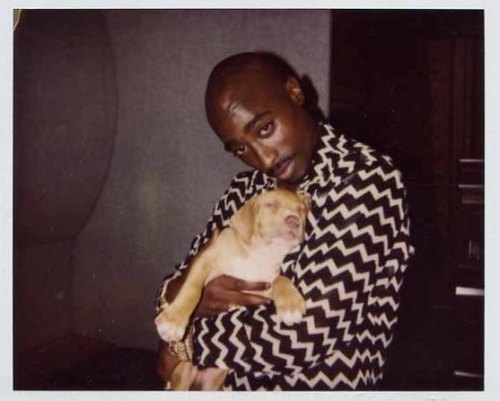
An alligator named Mr Teeth was apparently guarding a marijuana stash, California officials said Thursday after coming across the 5ft reptile during a routine probation check. Deputies entering Assif Mayar’s home on Wednesday also found 34lb of marijuana valued at an estimated $100,000. Mr Teeth was in a Plexiglass tank nearby.

“We get guard dogs all of the time when we search for grow houses and people stashing away all types of dope. But alligators? You just don’t see that every day,” said Alameda County sergeant JD Nelson.

Mayar, 32, told deputies he got the alligator to commemorate rapper Tupac Shakur’s 1996 death.

via Police find 5ft alligator named Mr Teeth guarding 34lb stash of marijuana | World news | guardian.co.uk.

tupac puppy

Leave a comment

Filed under Animals, drugs, memorial, representation

Eddie Huang: Fresh off the boat

It was late at night when I stumbled onto Eddie Huang’s new Vice TV show Fresh Off the Boat.  I like food travel shows, and I like degenerates, so this show was already in my wheelhouse.

I’m a vegetarian, and I wouldn’t recommend the first episode of Eddie’s Bay Area show because he spends much of the episode with a Bay Area motorcycle crew killing rabbits.  (Although I’ll note that I enjoyed his ending rant where he suggests to meat eaters who don’t kill their own critters that they imagine the dead bunny every time they take a bite.)

Yeah, there are a bunch of things to discount these Eddie Huang shows: the slang which seems both forced and out-of-date, the relentless sexism (women appear only as sex objects or as servants), and the hipper-than-thou tone which permeates the whole project.

But I’m not going to pretend that I don’t like parts of the show.  Eddie comes across as pretty smart, adding complexity to some of the traditional narratives about food, culture and popularity.  And more than that, he simply shows his foolishness.  He tells self-deprecating stories, snaps on absolutely everyone, sports terrible fashion, and spends more than enough time mired in drugs.  Witness his first episode in Taiwan where he not only explains how to buy Betel nuts, but also how to use them, showcases a juvenile aversion to penis shaped waffles, and spends some time at the late night shrimp pool.  Not your traditional travel food show.

Leave a comment

Filed under Animals, food, vegetarian

Blue whale poop

Photo by Eddie Kisfaludy. Taken from Wired.

The waters were rich in krill, the tiny crustaceans on which blue whales feed, and their orange hue was brightly visible in a fecal plume he photographed. It’s hard to judge absolute distances from the photo, but in scale the deposit is nearly as long as a full-grown blue whale.

It may well be the world’s largest documented poop. It’s also an exclamation point to a line of research pursued in recent years by marine biologists who say whales are the ocean’s unappreciated gardeners, playing enormous roles in nutrient and carbon cycles. In short — or perhaps in long — their poop helps make the aquatic world go round.

via The Hidden Power of Whale Poop | Wired Science | Wired.com.

Thanks to Dan Weiss and his morning coffee links for the connection.

Leave a comment

Filed under Animals, nature