Category Archives: capitalism

Not everyone has access to the same technology

Jen Schradie on the digital divide.  Thanks to Cyborgology via the Society Pages.

6. But aren’t people from marginalized communities “leapfrogging” over desktops, laptops and even tablets by using their mobile phones?

As Sociologist Sheila Cotton put it, “Could you type a 10 page paper on your phone?” However smart it might be, newer, smaller, sleeker gadgets, such as the iPad mini, are designed more for consumption, rather than producing and engaging with online content. Certainly, many people are tweeting and posting status updates with their smart phones, but class divisions are stark both domestically and worldwide for smart phone, rather than mobile phone access. And mobile devices are not always “smart.” As I have argued, having online access at a variety of locations (i.e. home and work) and owning a lot of gadgets allows people to control the means of digital production and have the autonomy for high levels of Internet use. One cell phone doesn’t cut it.

Leave a comment

Filed under academics, capitalism, communication, learning, media, propaganda, representation, technology

Flex! University articulation of labor as duty

The Feminist Wire comes through with a nice write up about academic labor.  Here Paul Seltzer, a GW Women’s Studies major, articulates the painful implications of the academic culture which insists on students and faculty suffering in order to retain connection to the school.

Flexible instructors and flexible students, dependent upon the corporate university for a wage and a future, are those whose labors and bodies stretch to satisfy the requirements that would make them valued members of the university’s community, less at-risk to a budget cut here or a rise in tuition there.  Flexibility means that when the corporate university applies such pressures, instructors and students will bend as much as they can so that they will not snap.  Sure, I can teach another class for minimal pay.  Sure, I will work freshman orientation in return for free housing.  Sure, I will go into debt.

I observe in my own academic life that the credibility of the institution is used to help justify these kinds of decisions.


Leave a comment

Filed under academics, capitalism, feminism, health, learning, propaganda, representation, resistance

Tupperware documentary

The PBS documentary series “The American Experience” is top notch.  During dinner tonight we watched the Tupperware documentary.

This film covers the gendered workplace, women’s opportunity after World War II, Brownie Wise (the inventor of the home party model), marketing consumerism, new uses for plastics, sexism, gender norms and so much more.  Get down!

Leave a comment

Filed under capitalism, documentary, feminism, food

Reading Yu the turtle (re)productively

1.   The act of saving an individual turtle maimed by a shark is deeply symbolic.  The choice to save this turtle, Yu, must be contrasted against the ‘Japanese fishing net” which has probably maimed a thousand times as many turtles as the offending “brutal” shark.

KOBE, Japan — Life looked grim for Yu, a loggerhead turtle, when she washed up in a Japanese fishing net five years ago, her front flippers shredded after a brutal encounter with a shark.

via Keepers give loggerhead turtle prosthetic fins to swim again.

2.   Yu the mauled turtle is kept as an amusement (and testament to the generosity of humans) in a Kobe Aquarium.  She has been fitted with “27 models of prosthetic fins.”

Now keepers at an aquarium in the western Japanese city of Kobe are looking for a high-tech solution that will allow the 25-year-old turtle to swim normally again after years of labor and 27 models of prosthetic fins behind them without achieving their goal.

via Keepers give loggerhead turtle prosthetic fins to swim again.

3.  Her keepers enlisted the help of many experts who tried again and again to create prosthetic fins for this one turtle.  They often caused Yu pain while they tried to get her capable of swimming.  I suspect the experts received professional prestige for their work.  The executive director of the Aquarium (Kamezaki) seems to know that the alternative for Yu the turtle would be a quick death.  The playing-God impulse isn’t in the arrogance to choose what happens to Yu (they certainly could set her on the beach and see which ways she chooses to go).  The arrogance is in the commitment to hold this living animal as an experimental subject and believing that it is in her best interests.

After nursing the loggerhead – an endangered species – back to health, keepers enlisted the help of researchers and a local prosthetics-maker to get her swimming again.

Early versions of prosthetic flippers caused her pain or fell off quickly, and with money short, Kamezaki said he sometimes felt like packing it in.

“There have been times I wanted to give up and just fix her up the best we can and throw her back in,” he told Reuters. “Then if luck’s on her side she’ll be fine, if not, she’ll get eaten and that’s just life. The way of nature, I suppose.”

via Keepers give loggerhead turtle prosthetic fins to swim again.

4. Why would you torture a living creature like this?  To ensure that she makes babies.  To inscribe the reproductive responsibility– the survival of the species into this single tortured being.  And of course Aquarium director Kamezaki knows that if she did have babies it “would make all the trauma in her life worthwhile.”

Though Kamezaki admits that it’s unlikely Yu will ever live a normal turtle life, he still has hopes.

“My dream for her is that one day she can use her prosthetic fins to swim to the surface, walk about, and dig a proper hole to lay her eggs in,” Kamezaki said.

“When her children hatch, well, I just feel that would make all the trauma in her life worthwhile.”

via Keepers give loggerhead turtle prosthetic fins to swim again.

5.  I am in favor of doing what we can to save endangered species.  And I like turtles, quite a bit.  But I’m offended at this techno-science band-aid fantasy public relations memo masquerading as science news.  For those slow to notice, the 28th version of Yu’s prosthetic flippers fell off less than a day after being attached.   That’s right, these wretched researcher/prosthetic makers/aquarium directors didn’t actually help this turtle yet again, and they’d like the world to know that they screwed up again.

But along the way the aquarium makes money, the scientists get fame, newspapers have a quaint human interest story, and humans world wide get to imagine that all the brutality of commercial fishing is being neatly fixed by magical experts who are attaching fake-flippers back on mauled turtles.  The desire to imagine the ecological harm done by human beings can be so easily fixed is at the heart of the problem.

The distraction of a single cute critter coupled with the affirmation of human-beings all-mighty capabilities (despite not actually turning out to have been that capable) makes this a most poisonous read.   Stop making yourself less guilty by using desperate measures to save individual cute animals — make structural changes in society to stop harming animals.

Leave a comment

Filed under Animals, capitalism, communication, learning, media, propaganda, representation

Corrupt Atlanta cops

Ten metro Atlanta law officers are in police custody, accused of using their guns, badges and authority to facilitate drug deals under orders of a street gang.

An FBI SWAT team arrested the current and former cops Tuesday for taking payoffs — some as low as $700 — to protect cocaine deals taking place in crowded shopping centers and school parking lots. Five alleged accomplices also were arrested.

via 10 metro police officers face corruption charges | www.ajc.com.

Thanks to Davey D, who shared a copy of the FBI press release which has a few more details.

Acting at the direction of FBI and ATF, the cooperator communicated to gang members and their associates that the cooperator sought police protection for upcoming drug deals. In response, three individuals—Bass, Coss, and Mannery—while not law enforcement officers themselves, provided the cooperator with the names of police officers who wanted to provide security for drug deals. Once these officers were identified, FBI and ATF agents arranged with the cooperator, as well as with Bass, Coss, and/or Mannery, for the officers to provide security for drug transactions that were described in advance to involve the sale of multiple kilograms of cocaine. The individuals charged today participated in undercover drug sales involving agents and/or cooperators, during which the agents and/or cooperators exchanged cash for kilograms of sham cocaine. The police officers, usually in uniform and displaying a weapon and occasionally in their police vehicles, patrolled the parking lots where the deals took place and monitored the transactions. These transactions were audio and video recorded.

The defendants arrested today include the seven police officers and one contract federal officer who protected the undercover drugs deals, as well as two former sheriff’s deputies who falsely portrayed themselves to be current deputies, and two individuals who falsely represented themselves as officers despite having no connection to a local police department. The defendants also include four individuals who are not law enforcement officers but who acted as intermediaries between the agents and/or cooperators and corrupt officers and also assisted with the scheme.

via Official FBI Report of 10 Police Officers Arrested in Atlanta for protecting Drug Dealers | Davey D’s Hip Hop Corner.

Leave a comment

Filed under capitalism, drugs, police, Surveillance

Away from the keyboard: pirate bay documentary

So much interesting stuff in this documentary.  Thanks to Pigeons and Planes for the link.

Leave a comment

Filed under capitalism, communication, documentary, hacking, human rights, learning, police, propaganda

Cannibal capitalism: superbowl edition

I enjoyed reading the saucy narrative invitation of the Rumpus ‘superbowl preview for people who don’t know football’.  But the section on Justin Smith — the wounded SF player reminded me of cannibal capitalism.  I’m understanding this as a move of self-promotion/financial gain via-the-suffering of the body.  Cast as sturdy spirit in this piece, we get a more transparent view than normal about the bodily costs of success in the NFL.

During his first year on the 49ers, Justin’s defensive line coach Jim Tomsula saw him spitting out tooth fragments after a collision with a teammate, and asked if he wanted treatment for the chipped teeth. “Nah,” Justin grunted. “Hell, I got a bunch of ‘em.”

Partially torn triceps are a different realm than chipped teeth, however, and playing through this kind of injury can exact a dear tuition, payable in future surgeries, decades of painkillers, financial insolvency, and for the moment, having a known, exploitable bulls-eye on his right arm.

Former NFL fullback Lorenzo Neal, no stranger to injury in his own Pro Bowl career, spoke to a radio station about what Justin Smith should expect. “Guys are going to be hitting it, chopping it,” Neal said. “The triceps is mostly when you extend. He’ll have one arm to punch with, I think the other arm will be more to grab and wrap and tackle.”

“He’s going to be sore,” Neal adds. “And I know what he can do. They can put him on Toradol.” (Toradol is a potent non-steroidal anti-inflammatory) “Toradol, they inject in your butt. It’s a pain killer, it numbs the pain. You can play through it. Toradol, it’s candy. It was tea for me. I was taking Toradol like I was drinking coffee. You’re tight, you’re sore, and it relieves the pain for those three hours. We’ll see how Justin responds to it.”

We will see, indeed. Former player Akbar Gbaja-Biamila, writing for NFL.com, recalls, “One veteran player looked at me and said, ‘Take a shot of that and you won’t feel a thing when you play.’ I jumped in line, and that was the beginning of my Toradol dependency. After my first shot, I heard someone yell across the locker room, ‘Once you get on the T-train, you won’t get off.’”

The side effects are well known. Toradol rips up your stomach lining, and can cause vomiting, bloody stool, liver disease, and congestive heart failure. In addition, its pain-masking qualities make the player temporarily ignorant of further injuries endured while under the influence of the drug, with concussions and plantar fasciitis being among the most common collateral “side effects.” So, when the drug wears off, you may have a completely new injury, which can either mean surgery and the potential end of your career, or more drugs, and that’s not a choice that most players think over for too long.

via A Super Bowl Preview For People Who Don’t Know Football (2013 Edition) – The Rumpus.net.

Leave a comment

Filed under capitalism, drugs, representation, sport

Pepsi panic: Beyonce and Mark Bittman

I’m bored with the moral panic associated with Beyonce’s decision to take a big pile of money from Pepsi.  I’m not sure it is fair to expect political leadership or moral consistency from Beyonce.  She is a staggeringly talented entertainer — and anyone who makes personal decisions based on what Beyonce does has their own problems.

Mark Bittman has a pretty hard-worded critique of Beyonce’s Pepsi contract, mostly from the perspective of health in today’s New York Times.

I think we should criticize Pepsi, not the celebrities that they rent to hock their brand.  In some ways Beyonce is an easy target.  Attacking her might even distract from the substantial conversations we need to have about the health harms of soda.  We could note the historical antecedents of disrespecting and diminishing the power of black women entertainers.

And I can’t help but feel a little sorry for Beyonce, because, as a child of the eighties, the Pepsi sponsorship was a sign that a star had become a mega-star.  It is a sign of the shifting culture that we are now moving soda manufacturers into the category with cigarette companies, and her sponsorship is now *bad press*.

I like Mark Bittman, and he is welcome for dinner at my house any time.  I appreciate that he uses his platform in the New York Times to talk about important cultural and health dynamics of food.  In this essay he reminds us of the pervasive ability of sugary beverage manufacturers to advertise to us.  Product placement for instance:

My friend Laurie David counted 26 on-air shots of Coke during last season’s “American Idol” finale and an incredible 324 shots of Snapple in a June episode of “America’s Got Talent.” (“There are Snapple cups placed in front of each judge,” she wrote me. “I counted every time I saw a Snapple cup.”)

To those jaded enough to ask “So what?” I’d reply that’s a measure of how successful these kinds of campaigns are.

via Why Do Stars Think It’s O.K. To Sell Soda? – NYTimes.com.

Leave a comment

Filed under capitalism, food, health, media, race, representation

Lead and crime

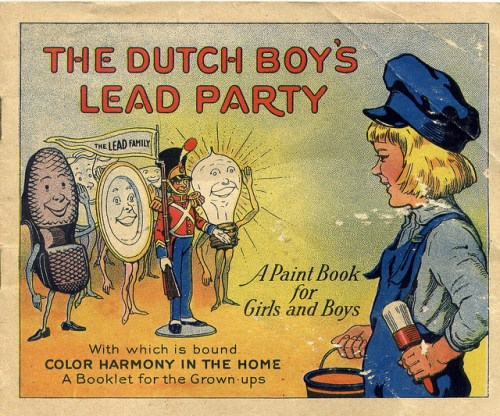
selling toxins with cute kids

We used to market toxins to little kids with ads like the above.  Seems appropriate to connect up with the new studies that suggest that lead toxicity is a lot more destructive than we thought.

Put all this together and you have an astonishing body of evidence. We now have studies at the international level, the national level, the state level, the city level, and even the individual level. Groups of children have been followed from the womb to adulthood, and higher childhood blood lead levels are consistently associated with higher adult arrest rates for violent crimes. All of these studies tell the same story: Gasoline lead is responsible for a good share of the rise and fall of violent crime over the past half century.

via America’s Real Criminal Element: Lead | Mother Jones.

Leave a comment

Filed under capitalism, health, learning

Drug cartels and communication

1.  I wish the New York Times didn’t publish so many good articles.  Behind their paywall I gotta believe that all those learned motherfuckers get so much good content they don’t even know what to read.  C’mon New York Times, let free the information and let the world know that y’all write some good stories!

2. This is another Longreads best-of-the-year recommendation this time from Geoff Van Dyke.  Thanks Longreads, Geoff and the New York Times (you still suck).   And of course props to the author of this zippy article, Patrick Radden Keefe, who creates an enjoyable read.

3. This is a lot of money. . . flossing, one might call it flossing.

In 2007, Mexican authorities raided the home of Zhenli Ye Gon, a Chinese-Mexican businessman who is believed to have supplied meth-precursor chemicals to the cartel, and discovered $206 million, the largest cash seizure in history. And that was the money Zhenli held onto — he was an inveterate gambler, who once blew so much cash in Las Vegas that one of the casinos presented him, in consolation, with a Rolls-Royce. “How much money do you have to lose in the casino for them to give you a Rolls-Royce?” Tony Placido, the D.E.A. intelligence official, asked. (The astonishing answer, in Zhenli’s case, is $72 million at a single casino in a single year.) Placido also pointed out that, as a precursor guy, Zhenli was on the low end of the value chain for meth. It makes you wonder about the net worth of the guy who runs the whole show.

via How a Mexican Drug Cartel Makes Its Billions – NYTimes.com.

4.  One marker of power is the mask.  As in the cases of the ALF and Zapatista those disempowered wear the mask to obscure the identity of the participant, but also to make the struggle less about the individual.  In the case of the Mexican drug war, the use of the mask seems to be more clearly about retaliation and safety.

The tacit but unwavering tolerance that Mexican authorities have shown for the drug trade over the years has muddled the boundaries between outlaws and officials. When Miguel Angel Martínez was working for Chapo, he says, “everyone” in the organization had military and police identification. Daylight killings are sometimes carried out by men dressed in police uniforms, and it is not always clear, after the fact, whether the perpetrators were thugs masquerading as policemen or actual policemen providing paid assistance to the thugs. On those occasions when the government scores a big arrest, meanwhile, police and military officials pose for photos at the valedictory news conference brandishing assault weapons, their faces shrouded in ski masks, to shield their identities. In the trippy semiotics of the drug war, the cops dress like bandits, and the bandits dress like cops.

via How a Mexican Drug Cartel Makes Its Billions – NYTimes.com.

Leave a comment

Filed under capitalism, communication, drugs, human rights, juxtaposition, police, representation