Category Archives: memorial

Felicia the ferret: animals and science

Felicia the ferret. Image taken from Fermilab.

Scientific knowledge comes from inquiry into the natural world.  It is a valuable and important part of human existence.  As we learn and invent, it is equally important that we constantly reflect on how we do science — it is just as important to refine — to do science better.

I believe that using animals for experimentation is unethical.

I have a brief pause, reading the old articles about Felicia the ferret, who helped to clean the tubes at the National Accelerator Laboratory in Illinois.  There is something sweet about Felicia’s work that belies my understanding of animals in research laboratories.  Here are a few examination of the 1971 newspaper descriptions of this ferret used for science.

1. Natural aptitude

It seems as though each article describes the natural skills that make Felicia the ferret particularly capable of the tasks she is given (running a string through 300 foot tubes).  David Anderson’s article highlights the role of Robert Sheldon, the scientist who suggested that the lab try a ferret.

Being British, Sheldon remembered the use of ferrets by poachers who sent them into burrows after rabbits on English estates. Gamekeepers could hear the shooting of guns, but never the silent ferrets.

“Felicia is ideal for the work,” Pelczarski said. “The ferret is an animal filled with curiosity and seeks out holes and burrows. Its instinct is to find out what’s at the other end of a burrow, or, for that matter, a tube or a pipe.”

via Fermilab History and Archives Project | Natural History – Wildlife – Felicia Ferret.

2. Feminizing Felicia

Felicia the ferret is feminized at a number of points in the articles. Consider Peter Vaughn’s Minneapolis Star essay.  The introduction begins:

It is one of those success stories you read about: A small-town girl fresh off the farm finds fame and fortune.

Well, Felicia, who spent her early years on the farm of Stan Fredin near Gaylord, Minn., isn’t the average Minnesota farm girl.

In the first place, her hair is three different colors – brown, white and black.

Also, she is small as Minnesota girls go, barely topping 4 inches when on all fours.

Felicia is a ferret and left Fredin’s farm early this summer for a job with the National Accelerator Laboratory in Batavia, IL.

via Fermilab History and Archives Project | Natural History – Wildlife – Felicia Ferret.

Several of the articles suggest that Felicia be rewarded with a mate — each time the suggestion was denied because if she became pregnant she might not fit through the small holes she was being trained to run through.

She has her own special set of weight watchers, including Sheldon, who just doesn’t intend to let her get too big for the job.

Asked why there was only one ferret, Sheldon laughed and said, “If you think she needs company, you’re not really thinking ahead. We have to. Motherhood might just put her out of a job. Her career depends on her size. She’s important to us, but one is enough.”

via Fermilab History and Archives Project | Natural History – Wildlife – Felicia Ferret.

3. Memorializing Felicia to justify the use of animals in science.

Many of representations in these four articles are justifications for breeding, enslaving and using an animal for someone’s gain.

Part of the problem is that Felicia is a particular case — her work didn’t involve being cut open or enduring a painful series of experimental drugs.  Everyone can be sold the bogus particular story of a cute rodent running through the tubes bravely helping the scientists.  Contrast that to the 13 million animals being used in research.  The American Anti-Vivisection Society note that most of the test subjects are mice, rats and other rodents . . . like cute little Felicia!

Though the scientific value and ethics of animal research are increasingly being questioned, it is estimated that over 13 million animals are still being used in a wide variety of research projects every year in the United States. Purpose-bred birds, rats, and mice, as well as fish and other cold-blooded animals, make up the vast majority of the animals used in research (over 90 percent), yet are specifically excluded from the Animal Welfare Act. As a result, the U.S. Department of Agriculture (USDA) does not keep records of the use of these animals, nor is there any legal requirement to afford these animals even the minimal standards of care provided by the Animal Welfare Act.

via Animals Used in Research – The American Anti-Vivisection Society (AAVS).

Which makes the particularizing and justifying of this individual animal’s story so worthy of amplification.  Kathryn Winslow’s plaintive profile of the ferret is a pretty stark contrast to the usual life of a ferret in a research laboratory.

Felicia turned out to be a virtuoso at her work. She carried whatever was fastened to her harness for long distances, sometimes around many obstacles on the course. Those working with her were so pleased that they wanted to reward her at the open end of her journey, but they could not find a tidbit she particularly longed for. She was happy enough to see her cage at the end of the journey, the only lure that was ever used to bring her out at the other end.

She was soon famous. She has been talked about on radio, seen on television numerous times, and been written up in magazines and newspapers with national and international coverage. She stars in a television film to be released soon in Europe. Her personal “manager” at the laboratory is Walter Pelczarski, who lives in Clarendon Hills.

via Fermilab History and Archives Project | Natural History – Wildlife – Felicia Ferret.

This particular article notes that Felicia became famous for her participation in the cleaning of the tubes — an animal celebrity.   Why would this ferret get it’s own movie?  From an anthropocentric perspective this cute furry animal that solves a little problem in this giant scientific endeavor grounds the abstract science in a narrative that is comfortable.

Felicia didn’t want to go through those tubes, she was bred and raised particularly for this task.  She was trained and rewarded, and of course kept in a cage for most of her life.

When Felicia’s job running a string down the particle accelerator tubes was given to a small robot, the romantic save-the-particular-animal trope becomes more visible.  Again Kathryn Winslow in the Tribune:

This good life may soon end for Felicia. The laboratory scientists have designed and built a mechanical ferret, a device activated by compressed air and controlled by wires. They don’t need Felicia anymore. This was always the plan, with Felicia to be used only temporarily, while they built her robot.

But now Felicia is famous and she has a following of people concerned for her welfare; people who do not want to see her sent to a museum as an exhibit, which is what the laboratory may do with her two weeks from now.

They are thinking of sending her to Oak Ridge, Tenn., where there is a live museum of animals and creatures that have made a contribution to science. There are mice, guinea pigs, and snakes there, among other exhibits.

But it’s no place for Felicia, who is a pet and needs the affection of human beings. Will it take an act of Congress to save Felicia?

via Fermilab History and Archives Project | Natural History – Wildlife – Felicia Ferret.

Here is to an act of congress that frees all animals in captivity being used for experimentation.  If it’s good enough for Felicia, I bet it’s good enough for the ferret getting injected with Influenza virus down the road.

(Thanks to Boing Boing for the link to the Fermilab history and Archives project!)
Leave a comment

Filed under Animals, communication, juxtaposition, memorial, nature, representation, science

Kid President and Obama

Power of the internets x 1,000,000,000.

Leave a comment

Filed under communication, learning, media, memorial, representation

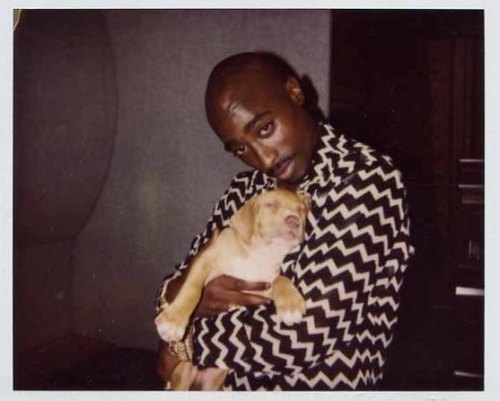
Tupac and animals

An alligator named Mr Teeth was apparently guarding a marijuana stash, California officials said Thursday after coming across the 5ft reptile during a routine probation check. Deputies entering Assif Mayar’s home on Wednesday also found 34lb of marijuana valued at an estimated $100,000. Mr Teeth was in a Plexiglass tank nearby.

“We get guard dogs all of the time when we search for grow houses and people stashing away all types of dope. But alligators? You just don’t see that every day,” said Alameda County sergeant JD Nelson.

Mayar, 32, told deputies he got the alligator to commemorate rapper Tupac Shakur’s 1996 death.

via Police find 5ft alligator named Mr Teeth guarding 34lb stash of marijuana | World news | guardian.co.uk.

tupac puppy

Leave a comment

Filed under Animals, drugs, memorial, representation

Chuck Brown kicked ass!

Jeff Chang has some coherent stuff to say about Chuck Brown’s passage:

And here was Chuck Brown, a nearly 50-year-old man with gold fronts, sporting wraparound glasses and a black hat, leading several hundred teenagers cranking — HARD! — to a genius medley of “Go-Go Swing” (a rewrite of D.C. native Duke Ellington’s classic), Lionel Hampton’s “Midnight Sun,” Eddie Jefferson’s “Moody’s Mood for Love,” and the Woody Woodpecker theme.

Between songs, the percussion section went off, the dancing got really serious, and Chuck shouted out the kids in the audience by name as if he was Mister Señor Love Daddy.

The kids started chanting, “Chuck baby don’t give a fuck!”

On cue, he’d reply, “That ain’t true.”

“Chuck baby don’t give a fuck!”

“I love all of you!”

The band did not stop for hours. The heat was withering. But you never wanted to leave this kind of joy.

via On the legacy of go-go pioneer Chuck Brown – Grantland.

Leave a comment

Filed under funk & soul, memorial, music

Sophie the dog: 1997-2012

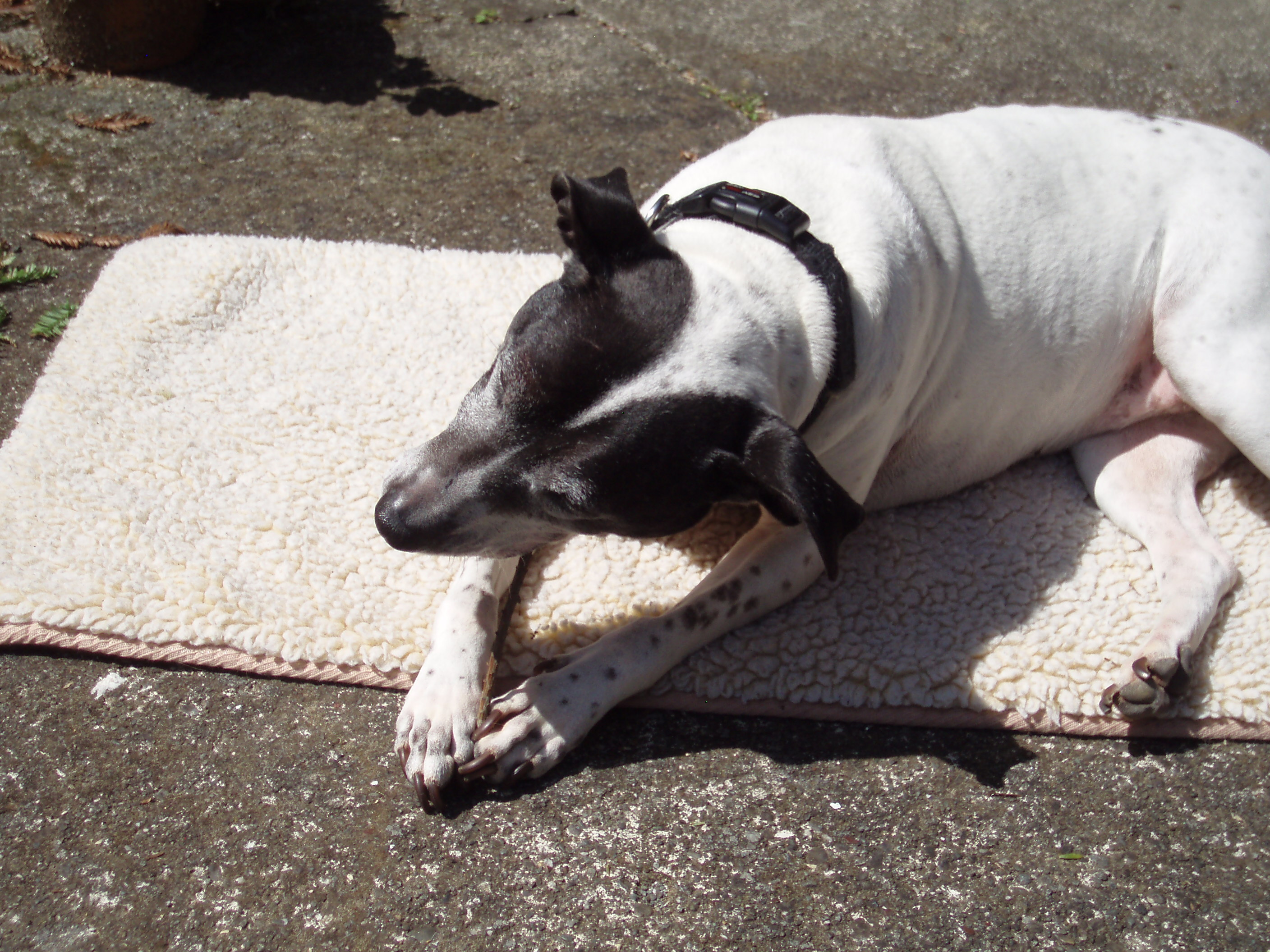
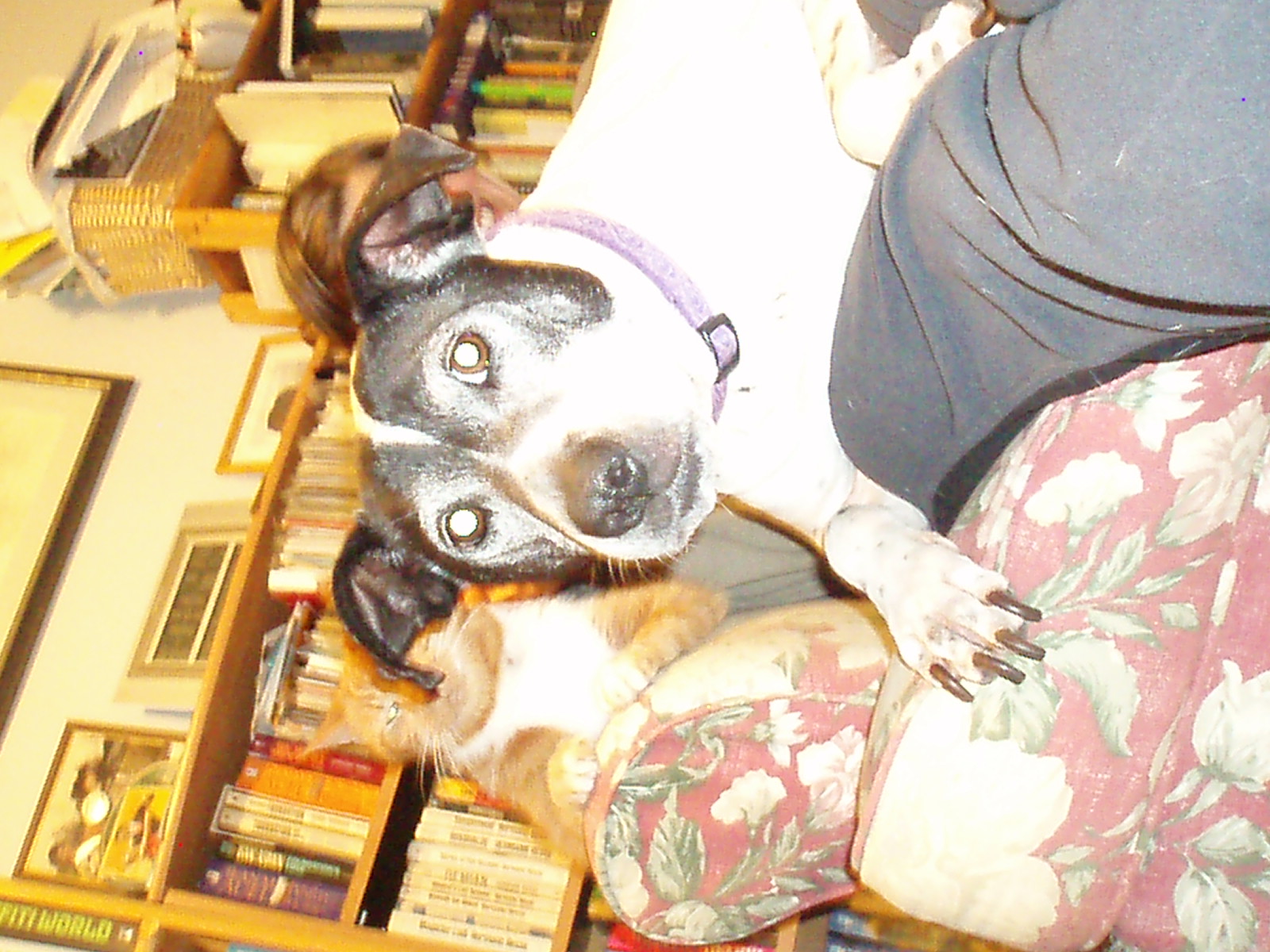
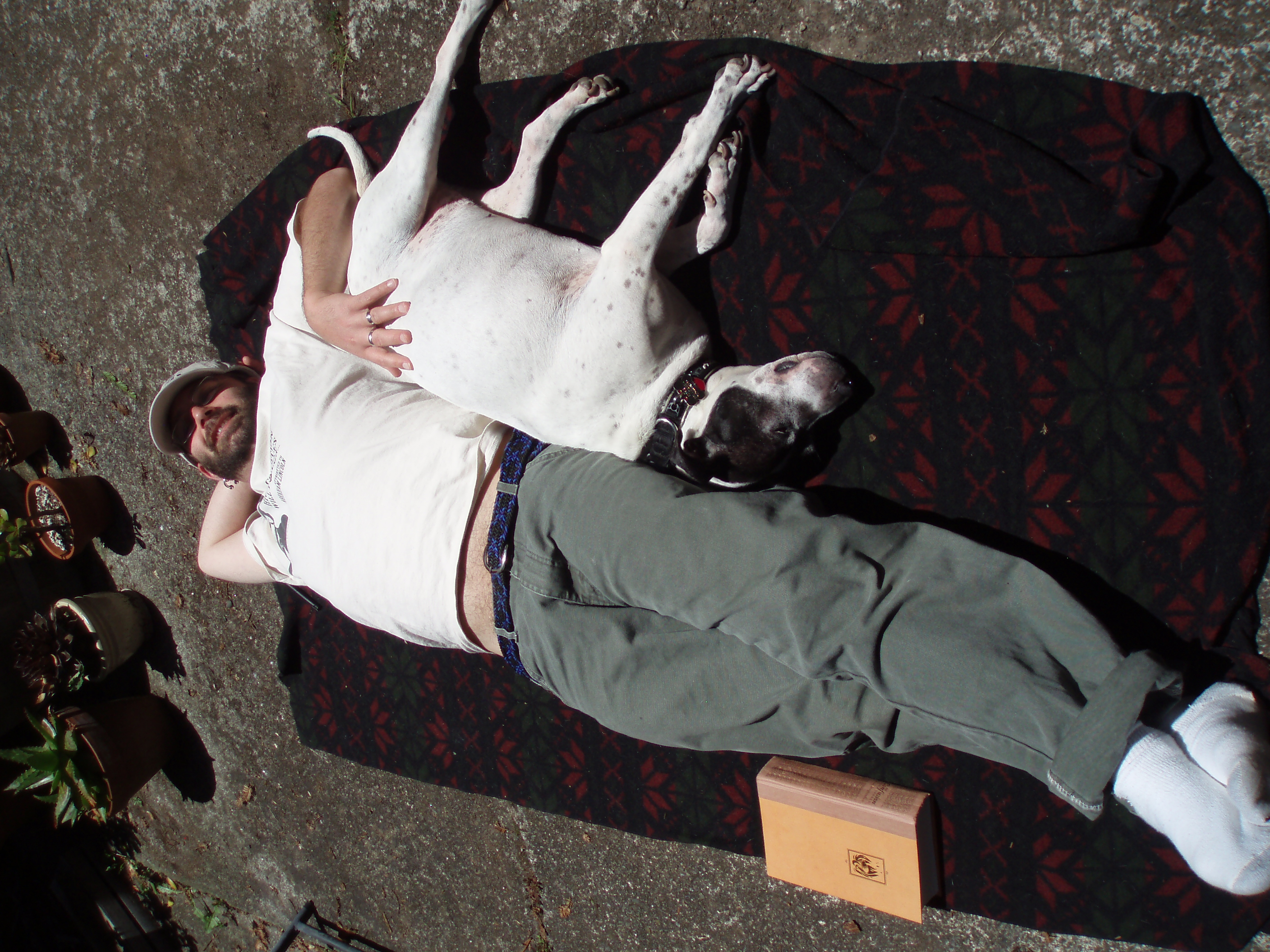
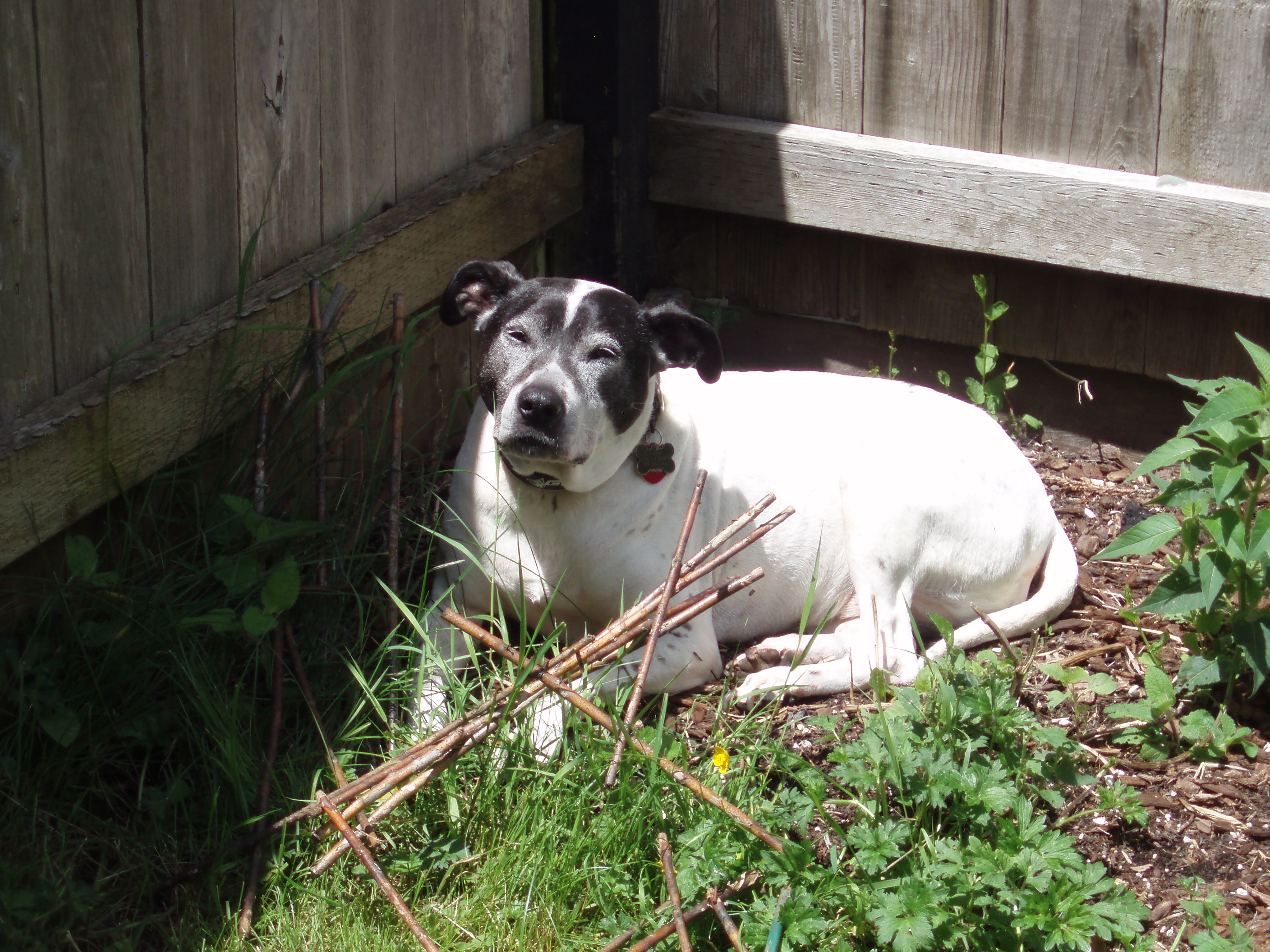
Rest in peace sweet friend.  I miss you.

Leave a comment

Filed under Animals, memorial

The Anthem for Trayvon

Let’s acknowledge Willie D as an organic intellectual of the highest order.

Leave a comment

Filed under communication, hip hop, human rights, memorial, police

Dirty New Orleans Cops convicted

Katrina brought out the worst in the law enforcement community of New Orleans.  Please note that these are federal convictions.  The state of Louisiana declined to prosecute any of these cases.

Two officers – sergeants Kenneth Bowen and Robert Gisevius – were sentenced on Wednesday to 40 years in prison years for killing 17-year-old James Brissette and wounding four other people. Another officer, Anthony Villavaso, received 38 years for the same crime.

The court heard that Bowen used an unauthorised AK-47 to spray bullets at a group of civilians hiding behind a concrete barrier. Gisevius used a military-style M-4 rifle to shoot at unarmed people. Villavaso fired at least nine bullets at civilians with his AK-47.

A fourth policeman, Robert Faulcon, was sentenced to 65 years for killing Ronald Madison, a 40-year-old man with learning difficulties, by shooting him in the back with a shotgun. Madison’s brother, Lance, was then arrested and accused of attempted murder after the police tried to cover up their actions by falsely accusing him of shooting at officers on the bridge. He was held in jail for three weeks before a court freed him.

via Five New Orleans police officers sentenced in hurricane Katrina killings | World news | guardian.co.uk.

Leave a comment

Filed under human rights, memorial, police, prisons, race, representation

Chaka Khan on Trayvon


Leave a comment

Filed under funk & soul, human rights, memorial, music

Trayvon Martin and victim blaming for hate crimes

Plies is one of the least conscious rappers I know.  Despite his cultural fifteen minutes crossing over with Gucci Mane’s fraternity party anthem “Wasted,” Plies has made music discussing his problems associated with the representation of young black men and violence. His song about Trayvon Martin covers some of the predictable landscape and I find surprisingly poignant.

Perhaps the massive resonance of the murder of Trayvon Martin is because the crime is so obscene.  The victim seems so innocent and the killer seems so enthusiastic to kill.  The crime is enraging because of the 911 tapes, the images of Martin in his football uniform, and his desperate phone call to his girlfriend.  We are invited to view a real injustice.

But of course racist killings take place all the time.  The difference is the victims are often blamed for their killing.  The usual way this is done is to associate some socially unacceptable behavior (sex, drugs, rap music, clothing) with the murdered victim and call them a “suspect.”

For people who regularly experience police harassment, the inaction taken probably seems like a confirmation that the system works against you.  For people who do experience privilege of not having to regularly deal with police (corrupt and otherwise) the inaction taken against Zimmerman probably seems like a grotesque aberration of the system.

Both of these groups of people will don hoodies to march for justice for Trayvon.  A big part of that anger is fueled by the perception that this violence was exceptional.  I would argue that it is ordinary.  What is exceptional in the Trayvon Martin case is that the victim blaming is particularly hard. *

Lets take a quick look at the ways the press and police did Sean Bell dirty after he was killed.  Undercover police officers shot fifty bullets into Bell’s car the night before his 2006 wedding.

Five of the seven officers investigating the club were involved in the shooting. Detective Paul Headley fired one round, Officer Michael Carey fired three, Officer Marc Cooper fired four, Officer Gescard Isnora fired eleven, and veteran officer Michael Oliver emptied two full magazines, firing 31 shots from a 9mm handgun and pausing to reload at least once.

via Sean Bell shooting incident – Wikipedia, the free encyclopedia.

Although Sean Bell’s case is used as an example of police misconduct, there was a lengthy series of public relations attempts to blame Bell for the murders.

Initially it was claimed that the officers were afraid of gun violence from Bell and his companions.  Never found a gun or evidence that there had been a gun in the car.

Then the press and police pointed out that that Bell had been legally intoxicated at the time he took the wheel, usually adding in that he was drunk at a strip club.    In essence suggesting that Bell had been shot because he had been drinking and driving or cavorting with strippers.

Michael Wilson from the New York Times makes this idiotic statement:

Further, trial testimony showed that Mr. Bell may have played some role, however unwitting, in the shooting, as he was drunk by legal standards when he pressed down on the accelerator of his fiancée’s Nissan Altima and struck Detective Isnora in the leg in an attempt to flee.

via Sean Bell Case.

Despite being a poster case for injustice, the victim blaming helped to let the police killers go free.   The cops were acquitted because they were found to be confused and it’s okay to kill people if it’s a mistake.  Scratch that, it’s okay to empty your magazine into a car and then reload and empty the second magazine into the car before figuring out what is going on.

But yesterday something interesting happened.  The cops who killed Sean Bell, some eight years ago were finally released from their jobs as cops.  One is getting fired!  Huh?  I wonder if the public scrutiny in the Trayvon Martin case raised up enough public discussion to pressure the New York Police Department to clean house.


For an interesting view on the construction of public information.  Check out the discussions about the editing of the Sean Bell Wikipedia page.  Note the battle over how to talk about Sean Bell’s arrest record.  Fascinating discussions about what to include and how to write the information.   A great place to view the articulation of victim blaming.


* Of course victim blaming isn’t impossible in the case of Trayvon Martin.  Check out Geraldo Riviera making the worst version of this argument.

Leave a comment

Filed under communication, hip hop, human rights, learning, memorial, police, propaganda, race, representation

Jasiri X: Trayvon

Check out the colors of change campaign for Trayvon.

There is an interesting campaign to mail a package of skittles the police chief who chose not to arrest Zimmerman.  I’m thinking about mailing some skittles to US Attorney General Eric Holder.

Leave a comment

Filed under colonialism, hip hop, human rights, juxtaposition, media, memorial, protest, representation, resistance