Category Archives: drugs

Pusha T and Kendrick Lamar: Nosetalgia

Pusha T’s album comes out in a couple of days.  It was streaming on a few spots.  I listened and was pleased.  Nice video with wunderkind Kendrick Lamar and salty veteran Pusha.

1. Single-shot steady-cam shot is an excellent back drop for drug rap video.

2. A lot of Ivan Drago (Rocky IV) references these days.

3. At first Kendrick Lamar plays the counter to Pusha’s proud drug dealer persona with his L.A. tragedy rap.  Then comes the turn.  “Go figure motherfucker/every verses is a brick.” Zing.

Leave a comment

Filed under drugs, hip hop, music

New thinking about crack

I appreciate the insights of Dr. Carl Hart, professor at Columbia University writing about drug use and moral panic.  Quoted here in an interview with Salon.

CH: I think crack cocaine is the easiest example  In the 1980s, as I was coming of age in my teens and my early 20s, people—black people, white folks, a number of people in the country—said crack was so awful it was causing women to give up their babies and neglect their children such that grandmothers had to raise another generation of children.

Now, if you look at the history in poor communities—my community, my family—long before crack ever hit the scene, that sort of thing happened in my house. We were raised by my grandmother. My mother went away because she and my father split up. She went away in search of better jobs and left the state, but it wasn’t just her. This sort of thing, this pathology that is attributed to drugs, happened to immigrant communities like the Eastern European Jews when they came to the Lower East SIde, but people simply blamed crack in the 1980s and the 1990s.

Another example is that, since the crack era, multiple studies have found that the effects of crack cocaine use during pregnancy do not create an epidemic of doomed black “crack babies.” Instead, crack-exposed children are growing up to lead normal lives, and studies have repeatedly found that the diferences between them and babies who were not exposed cannot be isolated from the health effects of growing up poor, without a stable, safe environment or access to healthcare.

via Carl Hart: Drugs don’t turn people into criminals – Salon.com.

When asked about what to do about these problems, Dr. Hart explains:

CH: That is complex, but quite simple to start. The first thing is we decriminalize all drugs. More than 80% of people arrested for drugs are arrested for simple possession. Wen you decriminalize, now you have that huge number of people—we’re talking 1.5 million people arrested every year—that no longer have that blemish on their record. That increases the likelihood that they can get jobs, participate in the mainstream.

Number two is dramatically increase realistic education about drugs—none of this “this is your brain on drugs” stuff, but real education, which looks like making sure people understand effects of drugs they’re using, particularly potentially medical affects. Don’t use heroin with another sedative because it increases the likelihood of respiratory depression. Realistic education, telling people what to do, how to prevent negative effects associated with drugs. We do it with alcohol—you shouldn’t binge drink, don’t drink on an empty stomach—and could do it with other drugs.

via Carl Hart: Drugs don’t turn people into criminals – Salon.com.

Hart has a book: High Price, check it out.  Thanks to Salon.

Leave a comment

Filed under drugs, health, learning, race, representation

Run the jewels: overdetermination and puppets

I wrote a little piece on El-P and Killer Mike’s Run the jewels album and rape culture.   I guess I was thinking about the socially conscious history of both of the artists.  You might describe El-P as a nihilist leftist and Killer Mike as an organic intellectual.

Of course Run the jewels is competitive over-the-top rap music.  In the effort to make the best art — artists attempt to outdo each other.  In the genre of hip hop this means bigger, harder, louder, and more outlandish.

The financial claims of most rappers have grown to ridiculous levels, with a number of artists simply shouting out expensive brand names to convey their own particular shopping allegiances.

It makes sense that the claims about violence, drugs and sex would also become more and more outlandish.

MF DOOM always seemed like a hip-hop critic.  His villainous characters (and in particular the masked versions of DOOM) always seemed pitiful — articulated as a mockery of other rappers whose representations of criminality seemed shallow in comparison to the lyrical work of the clever DOOM.

In the same way modern hip hop can be critiqued from the traditional morality perspective.  It might also be performed and overdetermined (made excessive and taken to the extreme) in order to achieve a very similar moral critique.

Which works as a basic introduction for “36” Chain,” a video which contains violence against old women, violence against young women, gun violence, violence against Andrew W.K, and a dual sense of mockery/sincerity that will probably excite some people and deeply offend others.

Noting the character Killums — the kidnapped puppet plays such an important role it might be worth including the El-P video for “Full retard” in this discussion.

Of course this video contains some drinking and driving, a lot of drug stuff, violence against moms, nudity, and of course, the lightly disturbing choice to have the puppet Killums lead in most of the debauchery. We can note that the expressive fiction of a puppet gives liberty . . . a kind of implicit defense.  At the same time thumbing the nose at the idea of childhood as an innocent time.

Killums seems to be El-P’s id. An expression of what he would like to do . . . the unfettered brain presented as a sex and drug obsessed squirrel.   Some artists make up Tyler Durdin . . . El-P chooses a one-eyed junkie squirrel.

Dave Chappelle’s sesame street mockery Kneehigh park runs through some of the same transgressions.   Pushing buttons with ever-increasingly crass discussions voiced by puppets that seems to be giving humorous versions of public service announcements.

You can say anything if you have a puppet voice the idea.  And as I’ve written about before — any moralistic critique sounds silly when lodged against a cute fuzzy animal with a human voice.  It is insulated against these kinds of arguments because you can always say “it’s just a puppet.”

Leave a comment

Filed under art, communication, drugs, hip hop, music, representation

Ten Frisk Commandments: Jasiri X

Yes. Yes. Yes. Yes. Yes. Yes (of course sometimes you gotta run). Yes. Yes. Yes. Yes.

Stay free y’all.

Salute to Jasiri X!

Leave a comment

Filed under colonialism, communication, drugs, hip hop, human rights, juxtaposition, learning, media, music, police, prisons, race, representation, resistance, Surveillance

Corrupt Atlanta cops

Ten metro Atlanta law officers are in police custody, accused of using their guns, badges and authority to facilitate drug deals under orders of a street gang.

An FBI SWAT team arrested the current and former cops Tuesday for taking payoffs — some as low as $700 — to protect cocaine deals taking place in crowded shopping centers and school parking lots. Five alleged accomplices also were arrested.

via 10 metro police officers face corruption charges | www.ajc.com.

Thanks to Davey D, who shared a copy of the FBI press release which has a few more details.

Acting at the direction of FBI and ATF, the cooperator communicated to gang members and their associates that the cooperator sought police protection for upcoming drug deals. In response, three individuals—Bass, Coss, and Mannery—while not law enforcement officers themselves, provided the cooperator with the names of police officers who wanted to provide security for drug deals. Once these officers were identified, FBI and ATF agents arranged with the cooperator, as well as with Bass, Coss, and/or Mannery, for the officers to provide security for drug transactions that were described in advance to involve the sale of multiple kilograms of cocaine. The individuals charged today participated in undercover drug sales involving agents and/or cooperators, during which the agents and/or cooperators exchanged cash for kilograms of sham cocaine. The police officers, usually in uniform and displaying a weapon and occasionally in their police vehicles, patrolled the parking lots where the deals took place and monitored the transactions. These transactions were audio and video recorded.

The defendants arrested today include the seven police officers and one contract federal officer who protected the undercover drugs deals, as well as two former sheriff’s deputies who falsely portrayed themselves to be current deputies, and two individuals who falsely represented themselves as officers despite having no connection to a local police department. The defendants also include four individuals who are not law enforcement officers but who acted as intermediaries between the agents and/or cooperators and corrupt officers and also assisted with the scheme.

via Official FBI Report of 10 Police Officers Arrested in Atlanta for protecting Drug Dealers | Davey D’s Hip Hop Corner.

Leave a comment

Filed under capitalism, drugs, police, Surveillance

Cannibal capitalism: superbowl edition

I enjoyed reading the saucy narrative invitation of the Rumpus ‘superbowl preview for people who don’t know football’.  But the section on Justin Smith — the wounded SF player reminded me of cannibal capitalism.  I’m understanding this as a move of self-promotion/financial gain via-the-suffering of the body.  Cast as sturdy spirit in this piece, we get a more transparent view than normal about the bodily costs of success in the NFL.

During his first year on the 49ers, Justin’s defensive line coach Jim Tomsula saw him spitting out tooth fragments after a collision with a teammate, and asked if he wanted treatment for the chipped teeth. “Nah,” Justin grunted. “Hell, I got a bunch of ‘em.”

Partially torn triceps are a different realm than chipped teeth, however, and playing through this kind of injury can exact a dear tuition, payable in future surgeries, decades of painkillers, financial insolvency, and for the moment, having a known, exploitable bulls-eye on his right arm.

Former NFL fullback Lorenzo Neal, no stranger to injury in his own Pro Bowl career, spoke to a radio station about what Justin Smith should expect. “Guys are going to be hitting it, chopping it,” Neal said. “The triceps is mostly when you extend. He’ll have one arm to punch with, I think the other arm will be more to grab and wrap and tackle.”

“He’s going to be sore,” Neal adds. “And I know what he can do. They can put him on Toradol.” (Toradol is a potent non-steroidal anti-inflammatory) “Toradol, they inject in your butt. It’s a pain killer, it numbs the pain. You can play through it. Toradol, it’s candy. It was tea for me. I was taking Toradol like I was drinking coffee. You’re tight, you’re sore, and it relieves the pain for those three hours. We’ll see how Justin responds to it.”

We will see, indeed. Former player Akbar Gbaja-Biamila, writing for NFL.com, recalls, “One veteran player looked at me and said, ‘Take a shot of that and you won’t feel a thing when you play.’ I jumped in line, and that was the beginning of my Toradol dependency. After my first shot, I heard someone yell across the locker room, ‘Once you get on the T-train, you won’t get off.’”

The side effects are well known. Toradol rips up your stomach lining, and can cause vomiting, bloody stool, liver disease, and congestive heart failure. In addition, its pain-masking qualities make the player temporarily ignorant of further injuries endured while under the influence of the drug, with concussions and plantar fasciitis being among the most common collateral “side effects.” So, when the drug wears off, you may have a completely new injury, which can either mean surgery and the potential end of your career, or more drugs, and that’s not a choice that most players think over for too long.

via A Super Bowl Preview For People Who Don’t Know Football (2013 Edition) – The Rumpus.net.

Leave a comment

Filed under capitalism, drugs, representation, sport

Documentary on Miami’s Liberty City

This is part one.  If you only know about this community based on Grand Theft Auto, then get your learn on.

If you are deciding to watch this or not, zip this video up to the 6:40 mark and pay attention to the young man in the red hat.

Don’t forget to watch parts two and three.

Leave a comment

Filed under documentary, drugs, police, race, representation

Tupac and animals

An alligator named Mr Teeth was apparently guarding a marijuana stash, California officials said Thursday after coming across the 5ft reptile during a routine probation check. Deputies entering Assif Mayar’s home on Wednesday also found 34lb of marijuana valued at an estimated $100,000. Mr Teeth was in a Plexiglass tank nearby.

“We get guard dogs all of the time when we search for grow houses and people stashing away all types of dope. But alligators? You just don’t see that every day,” said Alameda County sergeant JD Nelson.

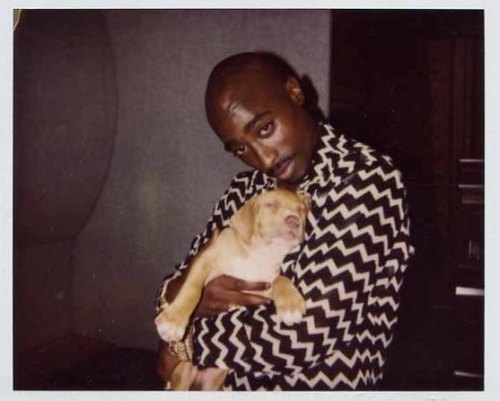
Mayar, 32, told deputies he got the alligator to commemorate rapper Tupac Shakur’s 1996 death.

via Police find 5ft alligator named Mr Teeth guarding 34lb stash of marijuana | World news | guardian.co.uk.

tupac puppy

Leave a comment

Filed under Animals, drugs, memorial, representation

Drug cartels and communication

1.  I wish the New York Times didn’t publish so many good articles.  Behind their paywall I gotta believe that all those learned motherfuckers get so much good content they don’t even know what to read.  C’mon New York Times, let free the information and let the world know that y’all write some good stories!

2. This is another Longreads best-of-the-year recommendation this time from Geoff Van Dyke.  Thanks Longreads, Geoff and the New York Times (you still suck).   And of course props to the author of this zippy article, Patrick Radden Keefe, who creates an enjoyable read.

3. This is a lot of money. . . flossing, one might call it flossing.

In 2007, Mexican authorities raided the home of Zhenli Ye Gon, a Chinese-Mexican businessman who is believed to have supplied meth-precursor chemicals to the cartel, and discovered $206 million, the largest cash seizure in history. And that was the money Zhenli held onto — he was an inveterate gambler, who once blew so much cash in Las Vegas that one of the casinos presented him, in consolation, with a Rolls-Royce. “How much money do you have to lose in the casino for them to give you a Rolls-Royce?” Tony Placido, the D.E.A. intelligence official, asked. (The astonishing answer, in Zhenli’s case, is $72 million at a single casino in a single year.) Placido also pointed out that, as a precursor guy, Zhenli was on the low end of the value chain for meth. It makes you wonder about the net worth of the guy who runs the whole show.

via How a Mexican Drug Cartel Makes Its Billions – NYTimes.com.

4.  One marker of power is the mask.  As in the cases of the ALF and Zapatista those disempowered wear the mask to obscure the identity of the participant, but also to make the struggle less about the individual.  In the case of the Mexican drug war, the use of the mask seems to be more clearly about retaliation and safety.

The tacit but unwavering tolerance that Mexican authorities have shown for the drug trade over the years has muddled the boundaries between outlaws and officials. When Miguel Angel Martínez was working for Chapo, he says, “everyone” in the organization had military and police identification. Daylight killings are sometimes carried out by men dressed in police uniforms, and it is not always clear, after the fact, whether the perpetrators were thugs masquerading as policemen or actual policemen providing paid assistance to the thugs. On those occasions when the government scores a big arrest, meanwhile, police and military officials pose for photos at the valedictory news conference brandishing assault weapons, their faces shrouded in ski masks, to shield their identities. In the trippy semiotics of the drug war, the cops dress like bandits, and the bandits dress like cops.

via How a Mexican Drug Cartel Makes Its Billions – NYTimes.com.

Leave a comment

Filed under capitalism, communication, drugs, human rights, juxtaposition, police, representation