Category Archives: food

Blackberry barbecue sauce

Tis the season to fight Himalayan Blackberries.  They are everywhere and busting out with tons of berries.  Delicious other than the giant seeds inside every little berry unit.  I made some blackberry barbecue sauce the other day, and it was pretty good.

Wash berries.  Pick the berries and fill a bowl w/ water and set the colander with berries in the water.  Swish it around.  If you are picking ripe berries, then they should explode if you spray water directly on the berry.  Repeat until you are satisfied.

Empty water from bowl and smash berries into colander.  Push mush out of the screen and keep seeds inside.

Add:

3 cloves garlic – diced fine.

a couple tablespoons of grated ginger.

vinegar

a little brown sugar

Ketchup to taste (I went about equal with the blackberry goo)

salt

Chili pepper to taste.

Ridiculous.

Next up — blackberry popsicles!


Leave a comment

Filed under food, nature

Onions and eggplant: the essence of life

India is ground zero for the intellectual property rights fight over food.  At this point, it’s basically corporations vs. the humans of the world.  Oops, Supreme court decided that corporations are people too.  But keep an eye on your nation’s key foods, cuz in India the fight is about onions and eggplants.

Now the National Biodiversity Authority of India (NBA) has dealt another blow: it has decided to sue the US biotech giant Monsanto and its Indian collaborators who developed the Bt brinjal.

The extraordinary decision by NBA is based on a complaint filed last year by the Bangalore-based Environment Support Group (ESG), alleging that the developers violated India’s Biological Diversity Act of 2002 by using local brinjal varieties in developing Bt Brinjal without prior approval from NBA. Leo F. Saldanha of ESG says his group is hopes NBA will not only launch the legal proceedings soon but also stop processing Monsanto’s recent application to work with two varieties of Indian onions.

via Nature News Blog: India’s biodiversity agency to sue Monsanto.

Leave a comment

Filed under capitalism, food

The conscience of meat eaters: suicide food

I have taught the ideas of Carol Adams connecting feminism to vegetarianism for the last fifteen years.  I believe Carol Adams and other ethical vegetarian thinkers provide important insight into the most persuasive articulation of compassion and for animal rights.  These thinkers provide help exploring the questions  associated with ethics, violence and killing.

One key insight I’ve drawn from Carol Adams is to scrutinize the language of representation.    How living animals are re-articulated to become advertisements for their own obliteration.  Unpacking the driving justification for violence itself involves interrogating the artifacts that sooth the conscience of human animals.

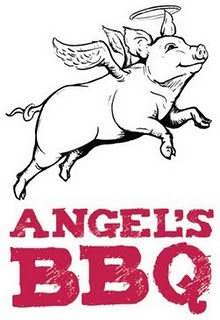
Suicide food is a humorous attempt to pinpoint images which represent animals as happily giving their lives for human consumption.   Here is the commentary on the angelic pig advertisement above:

If we could hear the thoughts of this pig, this newly minted angel, he might say, “At last! I am delivered at last from the stinking life into which I was born, and which was bequeathed to me as a necessary precondition for my ascendance into blissful eternity!” (Getting killed and grilled really brings out the poetry in a pig.) “Ill will? I bear the humans—my betters from their soles to their souls—no malice, for they have engineered my deliverance! And the only cost was a brief—so, so very brief—lifetime of worthlessness!”

Which is why the haloed food wears a beatific smile. Through his suffering and utter abnegation, he is clarified into his essence. And now, on ornamental wings, he soars to his last and best destination, and the life beyond life that his death and consumption made possible.

via Suicide Food.

I like the concept of suicide food — the term itself.  It provides a moment of critique to those who eat meat without reflection.  It also mockingly brings forward the image of the tools (confined animals, slaughterhouses, butchers) used to actually produce meat.

Smart and useful.  Thanks to Lisa Wade at Sociological Images for the connect.

2 Comments

Filed under feminism, food

Nancy Silverton on foccacia

Photo: Anne Cusack for the LA Times

Nancy Silverton is one of the greatest food intellectuals I’ve read.  She is smart, and capable of sharing her insights.  She recently took on the doughy focaccia and also provided insight into how she refines her understanding of breads.  I love the passages where she observes an Italian bakery to take some notes.  Reminder, this is one of the foremost experts on bread — who still takes time to learn from others.  Silverton:

But the other thing I did, which anyone can do, is observe very carefully.

My first clues came when I visited a panificio, or bakery, in Conversano, in Puglia. Although I wouldn’t be completely sold on focaccia for a few more days, I liked what I had there enough to ask if I could peek in the kitchen, where I saw three things that would change my focaccia-making world.

First, I saw that the focaccia was baked in a round cake pan. Until then, I had always baked focaccia in large rectangular sheet pans. But after seeing it baked in cake pans, I realized that by working with such an unwieldy lump of dough, I had been mishandling it and thereby taking the air out of it, which makes for a dense bread. Using the smaller pans means working with dough in a more manageable size and shape — a simple thing that seems obvious in hindsight.

I also saw that the baker was cutting the dough into portions, immediately putting each in the pan in which it was going to be baked, and then leaving it there to relax for its second rise. This eliminated the step of shaping the dough in the pan, which, again, would de-gas it and make for a denser bread.

The third and maybe most significant thing I saw was that the cake pans had olive oil in them, and not just enough to coat the pan, but a layer one-eighth to one-quarter inch deep. It was a substantial enough amount that the oil would be absorbed into the bottom crust, making it crunchy and flavorful.

Less than five minutes in this baker’s kitchen, without asking a single question, and my focaccia had already improved exponentially.

via Master Class: Chef Nancy Silverton explains how to make focaccia – latimes.com.

The LA Times is hosting four master classes with world renowned chefs.  Looks to be some cool insights, although even Thomas Keller can’t quite convince me to go stock up on xanthan gum.

Leave a comment

Filed under food, learning